
Services > Early Development & Play
Play-Based Social Skills
for Children
Using Play to Understand Friendship From the Inside Out
Some children can engage in imaginative play — but still find it hard to build or maintain friendships.
They may want friends, yet struggle to:
• Stay connected during play
• Understand what their friend is thinking or feeling
• Adjust their ideas when play doesn’t go their way
At Speech Therapy Adventures, we use play as the pathway into perspective-taking, flexibility, and emotional understanding — supporting children to connect more deeply with the inner worlds of others.
Speech Therapy Adventures is endorsed by:



Services > Early Development & Play
for Children
Using Play to Understand Friendship From the Inside Out
Some children can engage in imaginative play — but still find it hard to build or maintain friendships.
They may want friends, yet struggle to:
• Stay connected during play
• Understand what their friend is thinking or feeling
• Adjust their ideas when play doesn’t go their way
At Speech Therapy Adventures, we use play as the pathway into perspective-taking, flexibility, and emotional understanding — supporting children to connect more deeply with the inner worlds of others.
Speech Therapy Adventures is endorsed by:
Who This Is For
This service is for children who:
• Are able to engage in symbolic or imaginative play
• Want to play with others but find friendships difficult
• Have challenges with perspective-taking and social flexibility
• May become rigid, controlling, or withdrawn during peer play

From a DIR®/Floortime lens, these children often show core challenges at FEDC Levels 4–6 — including shared problem-solving, emotional thinking, and logical bridges between ideas.
Why Play Comes First
Before children can manage friendships, they need to feel safe exploring:
• Different viewpoints
• Emotional nuance
• Give-and-take within relationships
Play allows children to practice these skills without the pressure of real-time peer judgment.
We begin where children feel most secure.
How Our Therapy Helps
A Developmental, Relationship-Based Approach

Play With Familiar Adults First
We strengthen social skills through play with a trusted adult or sibling — where learning can happen gently and safely.

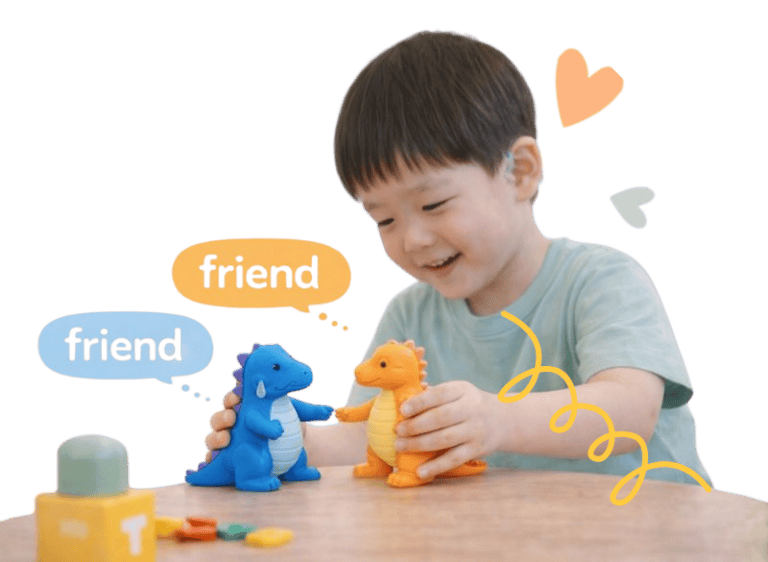
Building Perspective Through Play
We use characters, roles, and storylines to help children explore:
• “What is my friend thinking?”
• “Why did my friend react that way?”
• “How can I adjust my idea to keep the play going?”
Supporting Emotional Flexibility
Children learn to tolerate differences, repair breakdowns, and stay connected when play changes.

Bridging to Peer Play
Only when the foundation is ready do we support:
• Playdates
• Small peer interactions
• School-based social situations
What To Expect
Sessions are playful, reflective, and deeply relational. You may see:
• Guided imaginative play
• Gentle coaching during moments of social breakdown
• Language embedded naturally into play
• Progress that shows up gradually — and meaningfully — in real friendships

You Don’t Have to Navigate This Alone
If your child finds friendships confusing, exhausting, or disappointing, it can be hard to know how to help — especially when they want connection but struggle to sustain it.
You’re not failing your child. And your child isn’t “bad at friendships.”
Social understanding develops over time, and some children simply need more supported experiences to make sense of it. We’re here to walk alongside you — to understand your child deeply, guide their growth gently, and support you with clarity and care every step of the way.
Our Reassuring Reminder
Friendship skills don’t come from rules.
They grow from understanding, flexibility, and emotional connection.
Play gives children the space to practise all three.
Frequently Asked Questions
About Play-Based Social Skills for Children
My child can play imaginatively — why are friendships still hard?
Imaginative play doesn’t automatically mean a child understands other people’s thoughts and feelings. Friendship requires perspective-taking, flexibility, and emotional regulation — skills that often need intentional support to develop.
Is this a social skills “class” or group programme?
No. Our work begins with individual or supported dyadic play, not group teaching. Social understanding grows best through relationships, not rules or scripts.
Does my child need a diagnosis to access this service?
No diagnosis is required. We focus on your child’s developmental profile and current needs — not labels.
Is this suitable for autistic children?
Yes. Many autistic children benefit from this approach, especially those who enjoy play but find peer interactions confusing, rigid, or emotionally draining.
What age range is this for?
This service is typically suitable for children who can engage in symbolic or imaginative play (often preschool to early primary years), though suitability is determined individually.
Will you teach my child what to say to friends?
Rather than teaching fixed phrases, we support children to understand why people respond the way they do — so communication becomes flexible, meaningful, and authentic.
How long does it take to see progress?
Progress is often gradual and layered. Families usually notice changes first in emotional flexibility, followed by smoother play and more resilient friendships over time.
Will this help with school friendships?
Yes. Our goal is always to support real-world application — including playtime, group work, and peer relationships in school.
How are parents involved?
Parents are supported through reflections, guidance, and shared understanding — so you’re never left guessing what’s happening or how to help at home.
How is this different from traditional social skills training?
We focus on development and relationships, not compliance or performance. Skills emerge from understanding — not memorisation.
Let’s Support Friendship From the Inside Out
If your child wants friends but struggles to stay connected, there is a gentler, more meaningful way forward. We’d love to understand your child, hear your concerns, and explore whether this approach is the right fit.