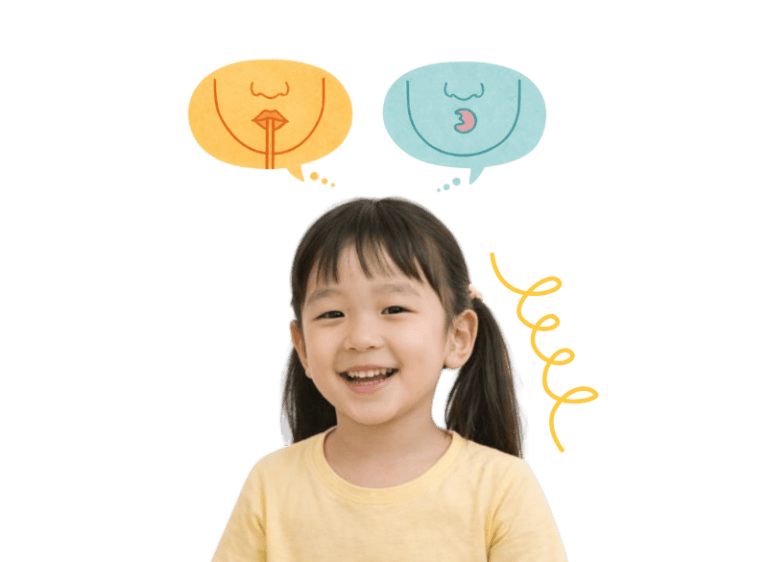
We use games, books, movement, and playful activities — because children learn best when they feel safe, engaged, and supported.
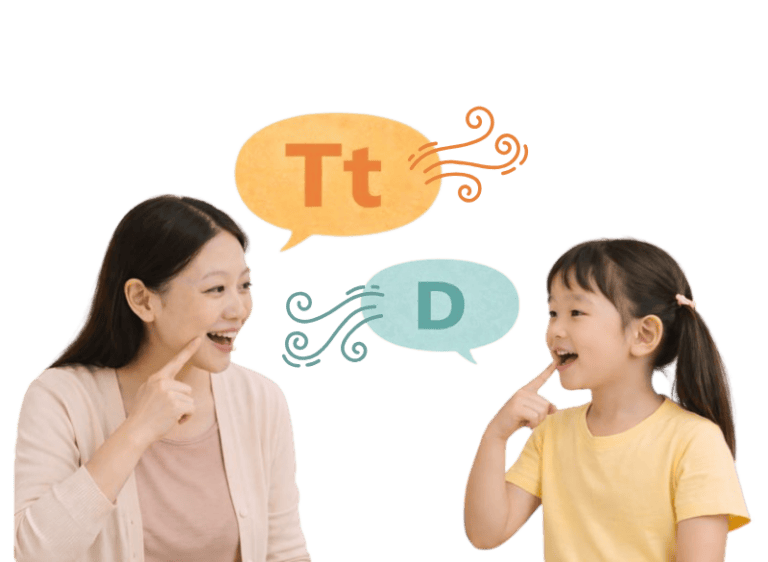
Correct Airflow & Sound Placement
Helping your child direct airflow effectively for clearer speech.
Strengthening Oral Movements
Supporting the muscles involved in speech and feeding.
Clear Articulation Techniques
Teaching sound production in achievable, encouraging steps.
Play-Based and Gentle Practice
Building skills through fun, child-led activities.
Confidence & Self-Expression
Helping your child feel proud of their voice and abilities.
What To Expect
In sessions, you can expect:
• Warm, child-led interactions • Simple activities to reinforce new skills • Encouragement for every effort and little win • Home strategies that fit naturally into your routines
Every voice deserves to be heard — clearly, proudly, confidently.
Supporting Your Child, Together
Your presence makes a real difference.
We’ll show you practical, gentle ways to support speech practice at home — no pressure, just encouragement and connection.
A Gentle Reminder
Children with cleft conditions are strong, capable, and full of potential. Speech is a learned skill — and with time, care, and the right support, progress unfolds beautifully.
Frequently Asked Questions
About Cleft Lip & Palate Speech Therapy
Why do children with cleft palate need speech therapy?
Cleft palate can affect airflow, sound production, and early speech. Therapy supports clearer speech, stronger oral skills, and confident communication.
At what age should therapy begin?
Early support is ideal. We can guide families even before surgery and continue as speech develops afterward.
Does every child with cleft palate need therapy?
Not always — but early screening ensures your child receives help if needed.
What challenges may occur?
Nasal-sounding speech
Difficulty producing pressure sounds (p, b, t, k)
Delayed early speech milestones
Oral-motor or feeding challenges (in younger children)
Does therapy replace surgery?
No — therapy works alongside medical treatment and surgery to build strong, functional speech.
How often are sessions?
It depends on your child’s needs. We will recommend a plan after assessment.
What techniques do you use?
Speech shaping, airflow awareness, motor-planning support, visual cues, and play-based activities — with strong parent involvement.
Will therapy be tiring or stressful?
No — sessions are child-led, gentle, and built around confidence.
Do parents learn strategies too?
Yes. We teach simple, everyday techniques to help your child practise naturally at home.
Can children with cleft palate speak clearly?
Many do — with the right combination of medical care and therapy support.
What if my child is shy or anxious?
We build trust, move gently, and follow your child’s pace to create a safe space for communication.
How do we begin?
Start with a conversation — we’ll help you understand what support your child may benefit from
We’re Here to Support Your Child’s Communication Journey
Let’s talk about your concerns and explore how we can help.