
Services > Speech, Sounds & Pronunciation
Articulation
& Pronunciation
When speech sounds are unclear, it can feel worrying — and that’s completely understandable.
With the right help, progress can happen beautifully.
Speech Therapy Adventures is endorsed by:


Services > Speech, Sounds & Pronunciation
& Pronunciation
When speech sounds are unclear, it can feel worrying — and that’s completely understandable.
With the right help, progress can happen beautifully.
Speech Therapy Adventures is endorsed by:
Articulation
& Pronunciation Therapy
Clear speech supports confidence, learning, and connection.
Some children find certain speech sounds difficult to produce clearly, which can affect how easily others understand them at home, in school, and with peers. Speech sound difficulties may be developmental, motor-based, or influenced by listening and language foundations.
At Speech Therapy Adventures, we provide individualised articulation and pronunciation therapy that supports children to develop clearer, more consistent speech in ways that feel achievable and encouraging.
Therapy focuses on:
• Accurate production of speech sounds
• Improving overall speech clarity and intelligibility
• Supporting confidence in everyday communication
• Ensuring skills generalise beyond the therapy room
Intervention is developmentally informed, play-based, and carefully matched to your child’s speech, language, and listening profile.
You May Be Noticing
• Speech that sounds “blurry” or unclear
• Sound substitutions (e.g., “tup” for “cup”)
• Leaving out sounds (“ca” for “cat”)
• Difficulty being understood outside the family
• Frustration when trying to communicate

Of course, speech intelligibility steadily increases with age and here are some key milestones
12-18 Months:
Understandable to parents/caregivers 0-25%; very little to others.
2 Years (24 Months):
Parents/caregivers understand 50-75%; others 25-50%.
3 Years (36 Months):
Parents/caregivers understand 75-100%; others 50-75%.
4 Years (48 Months):
Mostly understood by everyone (around 90-100%), even unfamiliar listeners.
What This Means
Articulation and pronunciation are part of how children learn to make and combine speech sounds.
Sometimes, children develop patterns that simply need the right guidance to shift — and that’s completely okay.
This is not a reflection of intelligence or ability. It just means their speech system is still developing.
Seeking support earlier is often more effective.
If the speech error is a disordered pattern, it can become more entrenched as your child continues to use that motor pattern while you “wait and see.”
Don’t wait and worry alone — reach out and chat with us.
How Our Therapy Helps
We use games, books, movement, and playful activities — because children learn best when they feel safe, engaged, and supported.
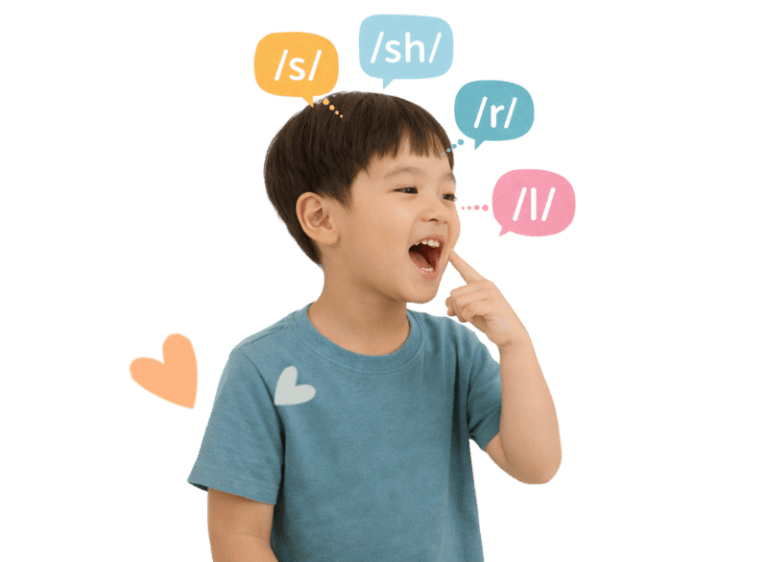
Build Correct Patterns
Support your child in developing accurate speech-sound habits naturally.
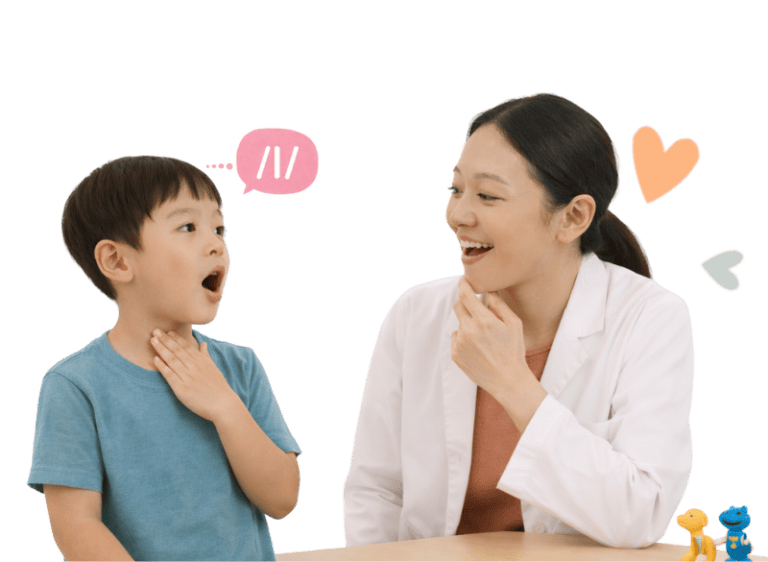
Strengthen Skills
Build speech muscles and motor patterns through fun, meaningful practice
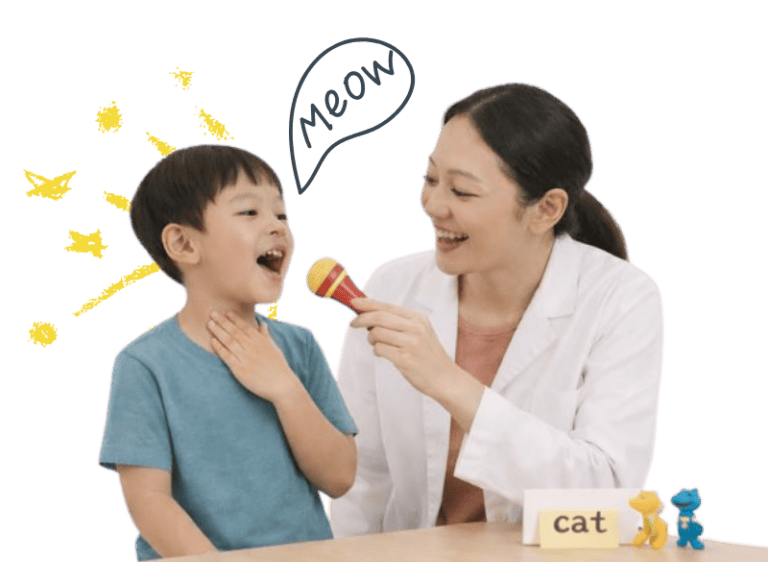
Playful Learning
Learn sounds in ways that feel enjoyable and motivating.

Grow Daily Confidence
Help your child use new sounds confidently in everyday situations.
What To Expect
In each session, we will:
• Explore speech sounds together
• Practise in positive, encouraging, playful ways
• Celebrate small wins — every sound counts
• Share simple, practical home strategies
Most importantly, both you and your child will feel supported every step of the way.

You’re Not Doing This Alone
You know your child best.
We’ll guide you with gentle, effective strategies to use at home so progress feels natural, consistent, and well-supported.
Our Reassuring Reminder
Clarity grows gradually – sound by sound, word by word.
With patience, practice, and the right support, children truly blossom.
Frequently Asked Questions
About Articulation & Pronunciation
What are articulation and pronunciation difficulties?
Articulation refers to challenges producing sounds clearly (e.g., “tat” for “cat”).
Pronunciation relates to broader sound patterns (e.g., replacing all “k” sounds with “t”).
When should I be concerned about my child’s speech clarity?
If your child is hard to understand after age 3, or gets frustrated often, an assessment can help.
Can children grow out of sound errors on their own?
Some early errors are normal. But persistent patterns after age 3–4 usually benefit from guided support to prevent ongoing speech and literacy challenges.
What causes speech sound difficulties?
They may be developmental or related to hearing, oral structure, motor planning, or processing. We’ll help identify the cause and best next steps.
What does therapy involve?
Play-based learning, movement, real-life practice, visual cues, and parent coaching.
Our focus: motivating, fun, functional communication — not rigid drills.
How long before we see progress?
Every child is different, but many families notice improvement within weeks with regular practice in and out of sessions.
Will my child need to practice at home?
Yes — but home practice is simple, natural, and built into daily routines (e.g., play time, reading. Daily conversations).
Do parents attend sessions?
We highly encourage it. Parent involvement helps children generalise skills more quickly. In fact, most of our parents enjoy sitting into the sessions and participate actively within the session.
Does speech clarity affect reading later on?
Yes — clear sound patterns support phonics, spelling, and reading development.
Do you offer online sessions?
Yes. Tele-therapy works well and is convenient for busy families.
How do we get started?
We begin with a gentle assessment, discuss your goals, and create a personalised plan. No pressure — just clarity and support.
What if English isn’t our first language?
That’s perfectly fine. We work with bilingual families and offer strategies for your home languages.
Ready to Get Started?
Let’s talk about your concerns and explore how we can support your child’s speech journey