
Services > Speech, Sounds & Pronunciation
Childhood Apraxia of Speech (CAS)
(Motor Speech Delay)
When your child knows exactly what they want to say — but the words don’t come out clearly — it can feel confusing and overwhelming.
You’re not alone, and you’re doing the right thing by seeking clarity and support.
Speech Therapy Adventures is endorsed by:



Services > Speech, Sounds & Pronunciation
(Motor Speech Delay)
When your child knows exactly what they want to say — but the words don’t come out clearly — it can feel confusing and overwhelming.
You’re not alone, and you’re doing the right thing by seeking clarity and support.
Speech Therapy Adventures is endorsed by:
You May Be Noticing
• Your child knows the word but struggles to say it
• Speech that sounds inconsistent — clear one day, harder the next
• Difficulty moving lips or tongue smoothly for speech
• Longer words or phrases feel especially challenging
• Frustration when they can’t express themselves
CAS does not mean your child isn’t trying.
Their brain is simply learning how to coordinate the movement patterns needed for speech.

CAS does not mean your child isn’t trying.
Their brain is simply learning how to coordinate the movement patterns needed for speech.
What This Means
Childhood Apraxia of Speech is a motor-planning condition.
Your child knows the word — but the brain’s message to the mouth needs extra support to sequence and coordinate movements.
This is not their fault, and it is not a reflection of intelligence.
With understanding, consistency, and the right guidance, children make meaningful and joyful progress.
How Our Therapy Helps
CAS therapy focuses on building speech through clear, structured motor-learning approaches.
We work gently, patiently, and positively — celebrating every sound, syllable, and brave attempt.
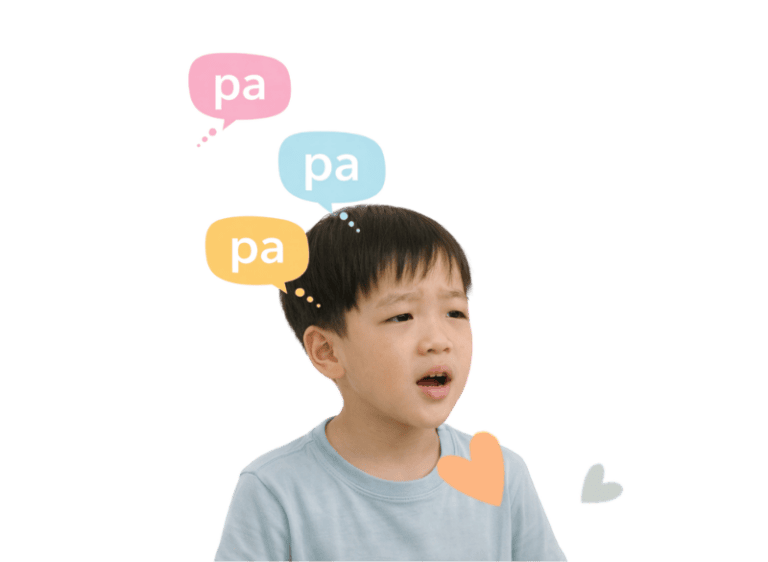
Repetitive Motor Speech Practice
Short, meaningful repetitions that strengthen sound–movement connections. These are not boring drills, but are embedded in playful interactions.

Step-by-Step Sound Sequencing
Breaking sounds and syllables into achievable steps that build success.

Confidence-Building Speech Patterns
Helping children find their “speech rhythm” one sequence at a time.

Emotional Safety During Communication
Because learning to speak requires courage — and encouragement matters.
What To Expect
In sessions, you can expect:
• Frequent, short bursts of meaningful practice
• Fun, motivating activities to keep learning engaging
• Clearly defined, small-step goals and visible encouragement
• Clear parent strategies to continue progress at home
Your child will always be supported — never rushed or pressured.

You’re Not Walking This Journey Alone
You are an essential part of your child’s progress.
We’ll guide you with simple, effective techniques that fit naturally into daily routines, so learning continues gently at home.
Our Reassuring Reminder
Progress in CAS can be gradual — but it does happen.
Every new sound, every new word, every proud smile is a step forward.
You don’t have to walk this journey alone. We’re here with you.
Frequently Asked Questions
About Childhood Apraxia of Speech (CAS) / (Motor Speech Delay)
What is Childhood Apraxia of Speech?
It’s a motor-planning condition where children know what they want to say, but their speech muscles struggle to coordinate movements.
How is apraxia different from an articulation delay?
Articulation involves single-sound errors.
Apraxia involves sequencing and coordinating sounds to form words consistently.
What are early signs?
- Limited sound variety
- Difficulty imitating sounds
- Inconsistent errors
- Late first words
- Groping mouth movements
Can apraxia be outgrown?
CAS typically requires specialised, consistent support. Early therapy makes a strong difference.
Speech errors can become more entrenched as your child continues to use that motor pattern while you “wait and see.”
Don’t wait and worry alone — reach out and chat with us.
What does therapy involve?
Motor-planning approaches, repetition, visual/tactile cues, rhythm and pacing, and play-based learning.
How long will therapy take?
Progress varies. Many children benefit from longer-term therapy with steady, meaningful gains.
Will my child be able to talk one day?
With early support, consistent practice, and collaboration, many children make strong progress in communication.
Do parents participate?
Yes — parent involvement helps reinforce learning naturally and consistently.
My child gets frustrated. How do you help?
We prioritise emotional safety, connection, and confidence. Pressure never helps — support always does. Our parents are able to recognise improvements as goals are clearly defined. As such, parents are more willing to connect before correcting.
Do you support AAC (communication devices)?
Yes. AAC can help children communicate while speech develops — and it does not prevent talking.
Do you work with schools and other therapists?
Absolutely. Collaboration supports consistent progress.
How do we start?
Book a conversation — we’ll listen, guide, and walk with you every step of the way.
Here to Support Your Child’s Voice and Future
Let’s talk about your child’s needs and explore the next steps together.