
Services > Hearing & Auditory Skills
Hearing Loss
for Children
Listening is the foundation for learning, language, and connection.
For children with hearing loss, difficulties are rarely limited to hearing sounds alone. They often affect how a child understands language, uses speech clearly, follows instructions, and participates confidently at home and in school.
At Speech Therapy Adventures, children come to us not just to hear better — but to make meaning from what they hear.
Speech Therapy Adventures is endorsed by:



Services > Hearing & Auditory Skills
for Children
Listening is the foundation for learning, language, and connection.
For children with hearing loss, difficulties are rarely limited to hearing sounds alone. They often affect how a child understands language, uses speech clearly, follows instructions, and participates confidently at home and in school.
At Speech Therapy Adventures, children come to us not just to hear better — but to make meaning from what they hear.
Speech Therapy Adventures is endorsed by:
You May Be Noticing
• Not responding consistently to sounds or their name
• Speech delays or unclear speech
• Difficulty following directions
• Relying more on visual cues than listening
• Frustration when trying to communicate

Hearing differences don’t define ability — they simply highlight where communication support can make daily life easier.
What This Means
Hearing differences affect how clearly the brain receives and interprets sound.
This can make listening, understanding speech, and communicating feel harder — especially in noisy places or fast-paced conversations.
For children, this may impact speech clarity, language development, and confidence.
But hearing loss does not reflect intelligence, effort, or potential.
With the right support — including hearing devices, listening practice, and communication strategies — meaningful progress is absolutely possible.
How Our Therapy Helps
We focus on strengthening listening, communication, and speech clarity — and when needed, we collaborate closely with your audiologist for a holistic, well-rounded approach:
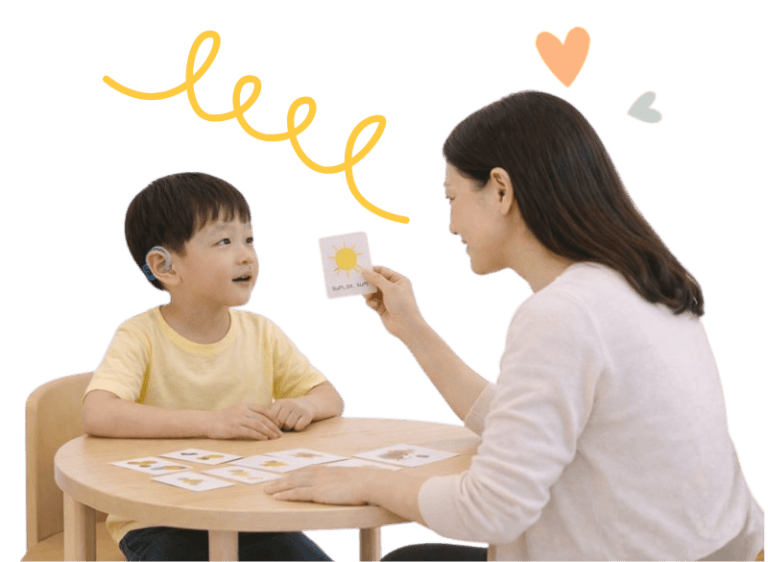
Listening & Auditory Training
We help children learn to:
• Detect, discriminate, and identify sounds and speech
• Listen in noise and group settings (classrooms, playgrounds)
• Sustain attention to spoken language over longer periods
This is especially important for children with hearing aids or cochlear implants, where access to sound does not automatically translate into understanding.
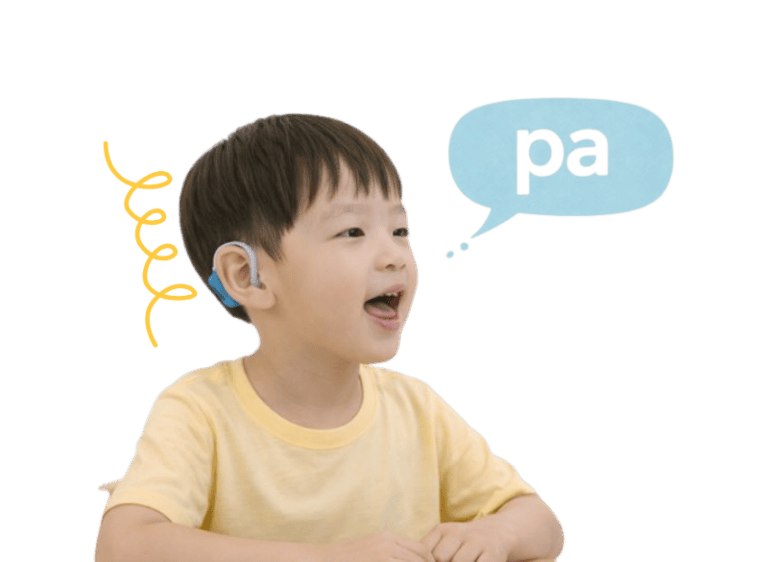
Speech Therapy (Articulation & Clarity)
We support children to:
• Produce speech sounds clearly and consistently
• Improve intelligibility so they are better understood by peers and adults
• Develop confidence in speaking, not just accuracy
Therapy targets are carefully selected to reflect the child’s listening abilities and speech motor skills.
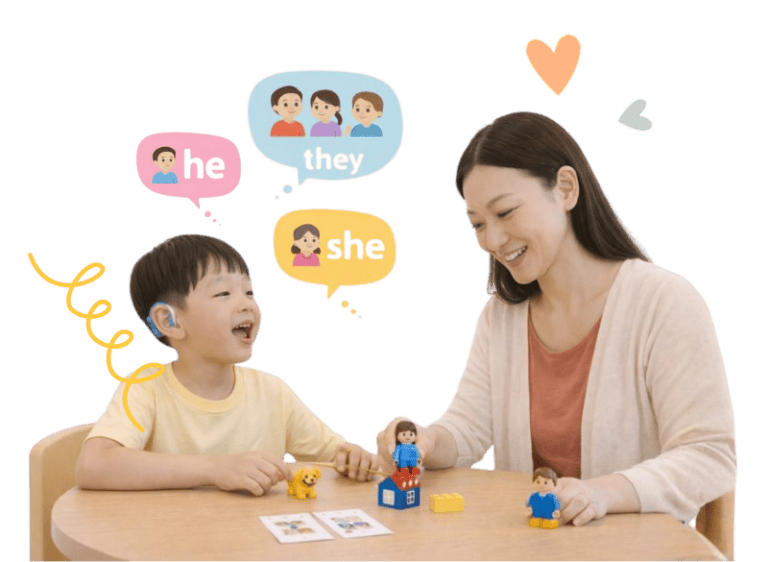
Language Intervention
We work on both understanding and expression, including:
• Grammar, sentence structure, and verb tense
• Pronouns and possessives
• Following longer, multi-step instructions
• Building vocabulary for school and social interactions
Our goal is functional language — language that helps the child participate meaningfully in daily life.
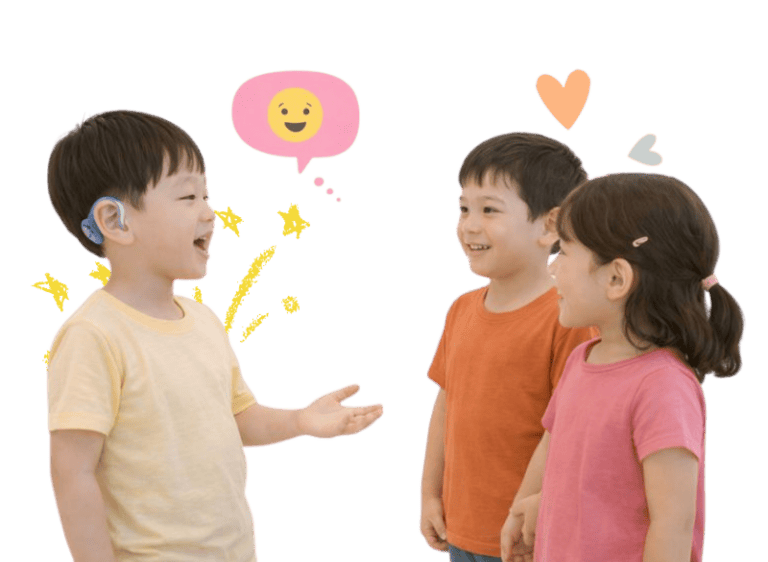
Social Communication Skills
Navigating social interactions more smoothly

Confidence in Communication
Building comfort in conversations, even when listening feels challenging.

Self-Advocacy & Practical Strategies
Empowering individuals to communicate their needs confidently at home, school, or work.
What To Expect
Whether your child use hearing aids, cochlear implants, or are newly exploring hearing support, therapy is designed to feel warm, practical, and confidence-building.
Support Tailored to Your Child’s Needs
• Speech perception and sound discrimination
• Listening skills in quiet and noisy environments
• Speech production and clarity (when needed)
• Understanding daily conversations at home, school, or work
• Strengthening vocabulary, language, and comprehension
• Social and classroom/workplace communication skills
• Self-advocacy strategies for real-life situations
How Sessions Feel
• Supportive, encouraging, and paced to your comfort
• Practice in real-life, meaningful contexts
• Gentle coaching with no pressure
• Tools and strategies for home, school, or workplace communication
• Celebrating every step forward — big or small
What Makes Our Approach Different
• Therapy is play-based and relationship-driven, not drill-based
• Parents are actively involved and coached to follow up at home
• Listening, speech, and language are addressed together—not in isolation
• We collaborate closely with audiologists and schools when needed
Our goal is to make communication easier, clearer, and more empowering in your child’s daily life.

You Don’t Have to Navigate This Alone
Whether you are supporting your child, or seeking clarity for a loved one, we’re here to guide you — gently, confidently, and without judgement.
Our Reassuring Reminder
Hearing differences do not limit potential.
Communication grows through support, practice, and connection — at any age.
Frequently Asked Questions
About Hearing Loss for Children
How does speech therapy help with hearing loss?
We strengthen listening skills, sound discrimination, speech clarity (when needed), language understanding, and confidence during communication.
Do you work with cochlear implant and hearing aid users?
Yes — we help develop listening, perception, and clear speech production around the device.
What does therapy focus on?
- Understanding speech in quiet and noise
- Following instructions
- Developing vocabulary and grammar
- Clear speech production
- Communication in school, work, and social settings
- Self-advocacy and communication strategies
Will my child learn to talk if they have hearing loss?
Many children do — early support and consistent listening practice help build strong speech and language foundations.
What if hearing loss was diagnosed late?
It’s never too late. We meet you where you are and build from there.
Do you collaborate with audiologists?
Yes — teamwork between audiology and therapy creates the best outcomes.
Do you help with listening in noisy places?
Yes — we practise strategies for real-life listening challenges.
What if my child uses signs or gestures?
All communication is valued — speech, signs, gestures, AAC. We support what works best for your family.
How long does therapy take?
It varies. Consistency helps build strong communication pathways over time.
Communication Connects Us
— Let’s Support It Together
Have questions about hearing or communication? Let’s start with a gentle chat.