
Services > Hearing & Auditory Skills
Hearing Loss
for Adults
Hearing well is about clarity, confidence, and participation — not just volume.
Many adults with hearing loss tell us:
• “I can hear, but I don’t always understand.”
• “Meetings are exhausting.”
• “I miss details in conversations, especially in groups.”
At Speech Therapy Adventures, we support adults to listen more effectively, communicate more confidently, and function better in real-world settings.
Speech Therapy Adventures is endorsed by:



Services > Hearing & Auditory Skills
for Adults
Hearing well is about clarity, confidence, and participation — not just volume.
Many adults with hearing loss tell us:
• “I can hear, but I don’t always understand.”
• “Meetings are exhausting.”
• “I miss details in conversations, especially in groups.”
At Speech Therapy Adventures, we support adults to listen more effectively, communicate more confidently, and function better in real-world settings.
Speech Therapy Adventures is endorsed by:
You May Be Noticing
• Conversations feel exhausting, especially by the end of the day
• Hearing in busy, noisy places is challenging
• You find yourself asking others to repeat more often
• Group conversations move too quickly and feel hard to follow
• You strain to hear loved ones, even when you really want to stay connected

Hearing differences do not define your abilities;
they simply show where the right communication support can make everyday life easier.
What This Means
For adults, hearing loss can influence social connection, work performance, and overall comfort in daily communication.
Partners in conversation may feel they need to speak louder, simplify sentences, or repeat themselves more frequently, which can make interactions feel effortful for everyone involved.
Hearing loss is often called a “third-party disability” because the communication load is shared by both the listener and the people they speak with.
Hearing loss does not reflect intelligence, effort, or potential.
With the right support — such as well-fitted hearing devices, listening practice, and practical communication strategies — communication can become smoother, more confident, and more fulfilling.
How Our Therapy Helps
Our work focuses on practical listening skills that directly impact daily communication and workplace performance.:
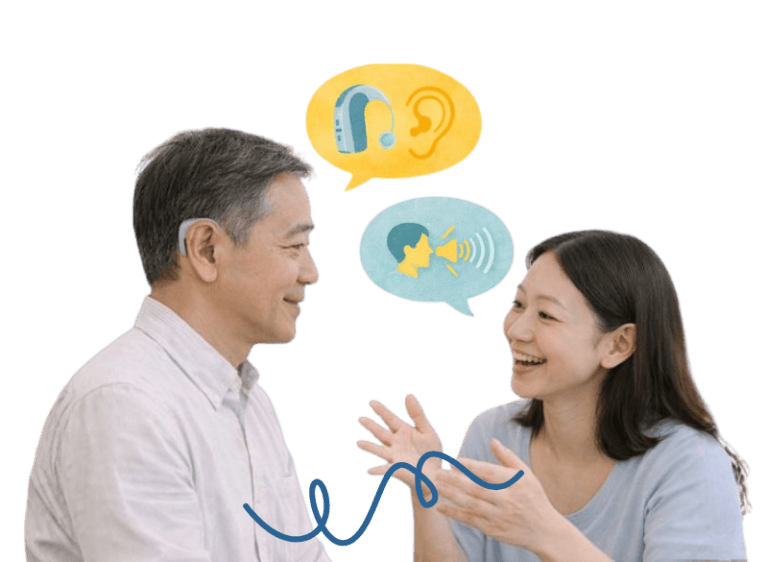
Listening with Clarity (Auditory Discrimination & Processing)
We help adults:
• Differentiate similar speech sounds
• Improve speech understanding in noise
• Strengthen auditory memory and attention
When appropriate, we collaborate with audiologists to support hearing aid or device fine-tuning so therapy and technology work hand in hand.

Following Longer Instructions & Spoken Information
We work on:
• Processing extended spoken instructions
• Holding information in mind while listening
• Asking for clarification effectively without losing confidence
This is especially relevant for professional and workplace environments.

Communication in Meetings & Discussions
Therapy supports adults to:
• Track multi-speaker conversations
• Contribute confidently in meetings
• Use repair strategies when information is missed
• Reduce listening fatigue
The focus is not perfection – but function, confidence, and sustainability at work.

Confidence in Communication
Building comfort in conversations, even when listening feels challenging.

Self-Advocacy & Practical Strategies
Empowering individuals to communicate their needs confidently at home or work.
What To Expect
Whether you use hearing aids, cochlear implants, or are newly exploring hearing support, therapy is designed to feel warm, practical, and confidence-building.
Support Tailored to Your Needs
• Speech perception and sound discrimination
• Listening skills in quiet and noisy environments
• Speech production and clarity (when needed)
• Understanding daily conversations at home, school, or work
• Strengthening vocabulary, language, and comprehension
• Social and classroom/workplace communication skills
• Self-advocacy strategies for real-life situations
How Sessions Feel
• Supportive, encouraging, and paced to your comfort
• Practice in real-life, meaningful contexts
• Gentle coaching with no pressure
• Tools and strategies for home, school, or workplace communication
• Celebrating every step forward — big or small
What Makes Our Adult Services Different
• Therapy is highly individualized and goal-driven
• Direct focus on workplace and real-life communication demands
• Respect for the emotional and cognitive load of listening with hearing loss
• A collaborative, non-clinical, adult-centred approach
Our goal is to make communication easier, clearer, and more empowering in your daily life.

You Don’t Have to Navigate This Alone
Whether you are supporting a loved one, or seeking clarity for yourself, we’re here to guide you — gently, confidently, and without judgement.
Our Reassuring Reminder
Hearing differences do not limit potential.
Communication grows through support, practice, and connection — at any age.
Frequently Asked Questions
About Hearing Loss for Adults
How does speech therapy help with hearing loss?
We strengthen listening skills, sound discrimination, speech clarity (when needed), language understanding, and confidence during communication.
Do you work with cochlear implant and hearing aid users?
Yes — we help develop listening, perception, and clear speech production around the device.
What does therapy focus on?
- Understanding speech in quiet and noise
- Following instructions
- Developing vocabulary and grammar
- Clear speech production
- Communication in school, work, and social settings
- Self-advocacy and communication strategies
Can adults benefit from therapy?
Absolutely. Adults often gain clarity in listening, and greater ease in daily communication. This gives them confidence in their everyday communication.
What if hearing loss was diagnosed late?
It’s never too late. We meet you where you are and build from there.
Do you collaborate with audiologists?
Yes — teamwork between audiology and therapy creates the best outcomes.
Do you help with listening in noisy places?
Yes — we practise strategies for real-life listening challenges.
What if I use signs or gestures?
All communication is valued — speech, signs, gestures, AAC. We support what works best for you.
How long does therapy take?
It varies. Consistency helps build strong communication pathways over time.
Communication Connects Us
— Let’s Support It Together
Have questions about hearing or communication? Let’s start with a gentle chat.